
· 5 min read
Tax relief and timekeeping: PAYE, ETI, UIF and SDL
By Beyond Attendance
In South Africa, payroll taxes and tax relief, including PAYE, the Employment Tax Incentive (ETI), UIF and SDL, all rest on one thing: accurate payroll data. And payroll data is only as accurate as the time records it is built on.
That makes timekeeping more than an HR task. It is a financial control.
How hours worked flow into tax
- PAYE — employees' tax is calculated on remuneration, and for hourly and shift workers remuneration depends on the hours they work, including overtime. Wrong hours mean wrong PAYE on the monthly EMP201 return, and a mismatch when you reconcile on the EMP501.
- ETI — the Employment Tax Incentive reduces the PAYE an employer pays for qualifying employees. It depends on monthly remuneration thresholds, minimum wage compliance and the hours an employee works: for employees who work fewer than 160 hours in a month, the incentive is reduced in proportion.
- UIF — contributions are 1% from the employee and 1% from the employer, calculated on remuneration up to a monthly ceiling.
- SDL — employers with an annual payroll above R500,000 pay a Skills Development Levy of 1% of their payroll.
What goes wrong when hours are wrong
When employee hours are captured incorrectly, businesses risk:
- Incorrect PAYE submissions
- Lost or reversed Employment Tax Incentive claims
- UIF and SDL miscalculations
- SARS penalties and audit exposure
- Labour disputes over underpaid overtime
The ETI example
ETI shows how directly hours affect cash flow. If hours are under-recorded, an employer can miss incentives it is entitled to. If hours are over-recorded, claims can be reversed later, with penalties.
Tax relief improves cash flow, but inaccurate timekeeping can quietly erase it.
Time records as a financial control
Accurate attendance systems are no longer just HR tools. When hours are captured at the source and carried into payroll without being re-typed, the numbers behind your tax submissions can be traced back to the scans they came from.
With Beyond Attendance:
- Employees clock in with fingerprint or facial recognition, so hours are recorded against the right person.
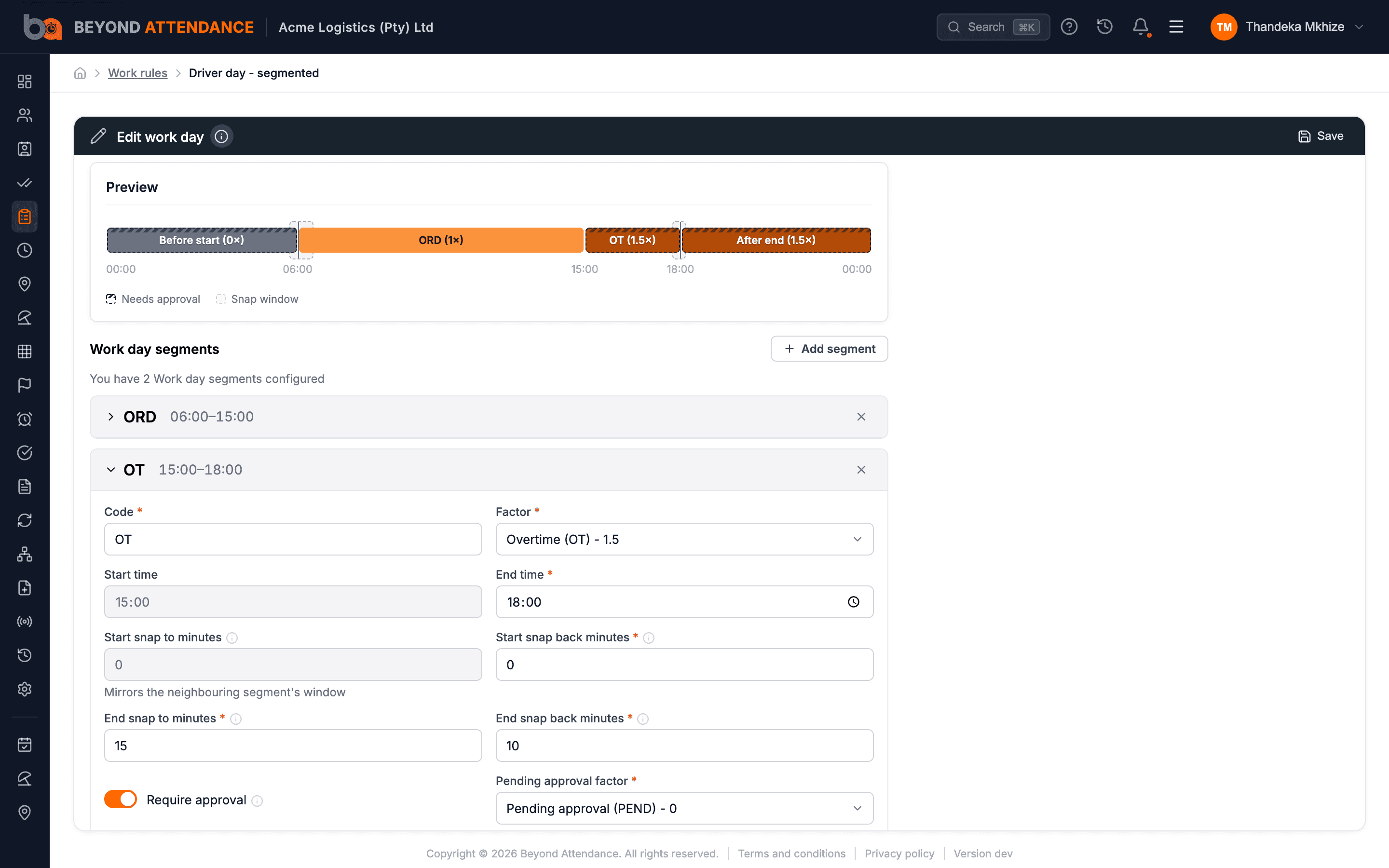
- Work day rules split hours into ordinary time and overtime at the factors you set, before they reach payroll.
- Payroll exports are built around your payroll system, so hours are not captured twice.
- Changes to time records are logged with who made them and when, so you can check the numbers before you submit.
Because in today's regulatory environment: time worked = payroll accuracy = tax compliance = financial protection.
Please note: this article is general information, not tax advice. ETI qualifying criteria and thresholds change from time to time, so confirm the current rules with SARS or your tax practitioner.
Want to see how your time records flow into payroll? Book a demo to see how Beyond Attendance can help.